
Migration in Nepal
Migration in Nepal fundamentally shapes the country’s demographic and socio-cultural landscape and its economic development is intrinsically linked to the movement of its people both internationally and domestically. We take this opportunity to investigate the history of migration for the country and the reasons its people migrate, explore how the country may approach migration going forward, and take a look at some real life case studies.
Domestic Migration
Need to know (follow links for further explaination):
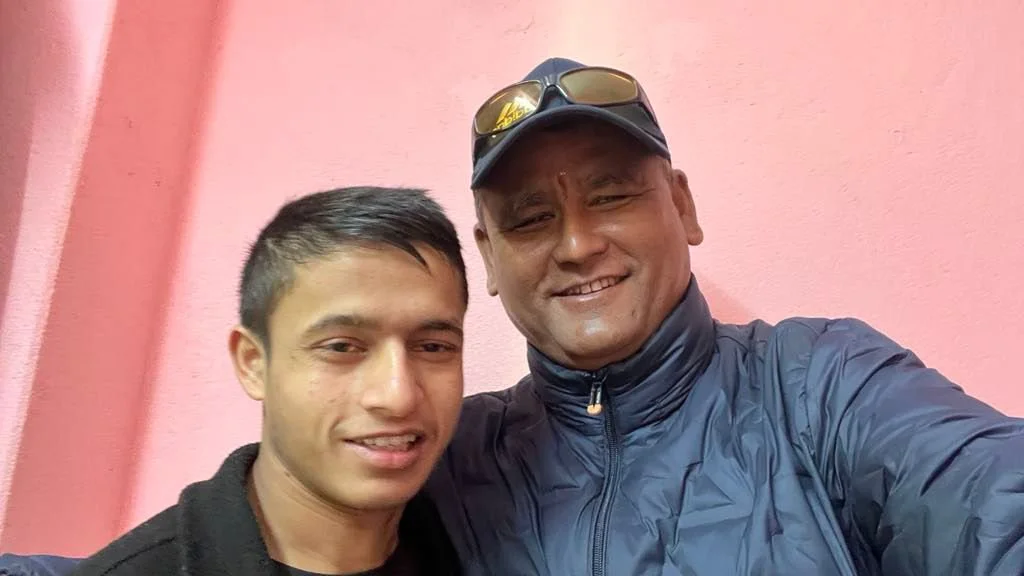
Case Study 1: Meet Naresh, a tenacious and bright young man, who, after completing his Secondary Education Examination (SEE) in July 2023, made the 950km trip from the remote Bajura district of the Budhinanda Municipality in far-western Nepal to Kathmandu (read Naresh’s whole story).
Naresh, who has a form of palsy in his hand, completed his secondary education despite his partial disability. Finding himself in an extremely remote region of Nepal notorious for issues of poverty and severe health and nutritional crisis, and with no local educational establishments capable of accommodating students with disabilities, this young man made the 3-4 day journey to Kathmandu to further his education.
With support, Naresh eventually found accommodation in a hostel and enrolled in Khagendra Navajeevan Special Education Secondary School and College to complete his college education. He is thriving in college and his life is already looking brighter, with the Social Welfare Council Nepal generously offering him employment following completion of his studies. Naresh’s story is just one example of why rural-urban migration is so common in Nepal and highlights that, although there are some negative aspects to it, there are clear benefits to domestic migration in Nepal.
International Migration
Need to know (follow links for further explaination):
A negative net migration out of Nepal has dominated since the 80s.
Permanent settlement at a destination is often not possible and remigration is common.
Migrants often experience harsh living and working conditions in certain destinations.
Case study 2: Gayatri moved to Saudi Arabia in pursuit of job opportunities and supports her sister who has an eye condition. She shared her experiences of working abroad with us and gave us her thoughts on the subject of migration:
“I went abroad as job opportunities were excellent. The payment system was also satisfactory according to the job, and I wanted to gain more experience in a different country.
I would love to work in Nepal if there was a suitable environment and services. All employees require a secure job and satisfactory salary, only then would we become inspired and motivated to work hard in our country.
More people went abroad to save money, to pay loans, for the children’s future e.t.c., but I have to save money to get married, save money for my future, and to support my sister because she cannot see properly due to glaucoma (eye disease). Therefore, I have to think about her. So it is too far to think about a bright future in Nepal.
In conclusion, young Nepalis are driven to work abroad to make a future and fulfil their basic needs.”
Case study 3: Sujit moved to the UAE in 2021 to gain training and pursue a career in hospitality. He told us that despite the opportunities this move has provided, the UAE does not represent an appropriate destination for settling with a family and is unsure of his future:

“My initial reason for moving to the UAE was employment and job experience. I have successfully gained knowledge in the hospitality sector. It’s been almost 5 years that I have embraced this field. I'm very good in customer service, cashier (learning about different currencies), food handling, leadership, and food and beverage controller, and the financial discipline has allowed me to continue saving for my future. However, I have found that the UAE presents significant, unexpected challenges for securing long-term career stability and for establishing a permanent life here, and I must say that the UAE isn't a suitable place for my upcoming family. I was hoping to find a better place for my upcoming career.
You ask if I would like to return to my country Nepal if the situation was different and I would like to honestly say that yes, absolutely, if those critical services and opportunities were stable and guaranteed. My heart will always be in Nepal, and I would love to use all the skills I've gained internationally in Nepal. However, for the next phase of my career, I need to focus on building a professionally stable and long-term secure foundation.
Regarding my salary, I have been responsible and have saved money to cover my upcoming family. However, who knows what kind of challenges I'm going to face in future. So I think saving is going to be my foundation in the future.
Maintaining my cultural identity while abroad is very important to me. I do this by staying connected with my sisters by participating in local Nepali community events when possible, and actively sharing my culture with people I meet here. My identity is not lost by moving abroad, it is simply adapted and carried forward into my upcoming family.”
In summary, migration in Nepal (both domestic and international) has both negative consequences and benefits.
With rapid ecological and political changes in the country, how Nepal navigates the reduction of these negative impacts while making the most of the benefits, will not only determine the destinies of current and future migrants, but will shape the country as a whole.